
Natural Ventilation: ventilation system types
Natural ventilation uses windows, vents, and building design to move fresh air through a home. It is simple and does not rely on fans or ductwork. Many older and smaller homes rely on natural ventilation as a first step toward better indoor air.
Natural systems help on mild days. They reduce stale air and control small amounts of humidity. They do not filter air and they do not control heat loss. That makes them less effective in extreme weather or in tight, well insulated homes.
Before deciding on a system, understand where natural ventilation works best and where it does not. It is low cost but limited. Use it together with other systems for better year round performance.
Here are common pros and cons to help compare natural ventilation with mechanical options.
- Pros: No energy cost to run, simple, low maintenance.
- Cons: Poor control, no filtration, can cause heat loss or gain.
- Best for: Mild climates or older homes with good airflow.
Exhaust-Only Ventilation: ventilation system types
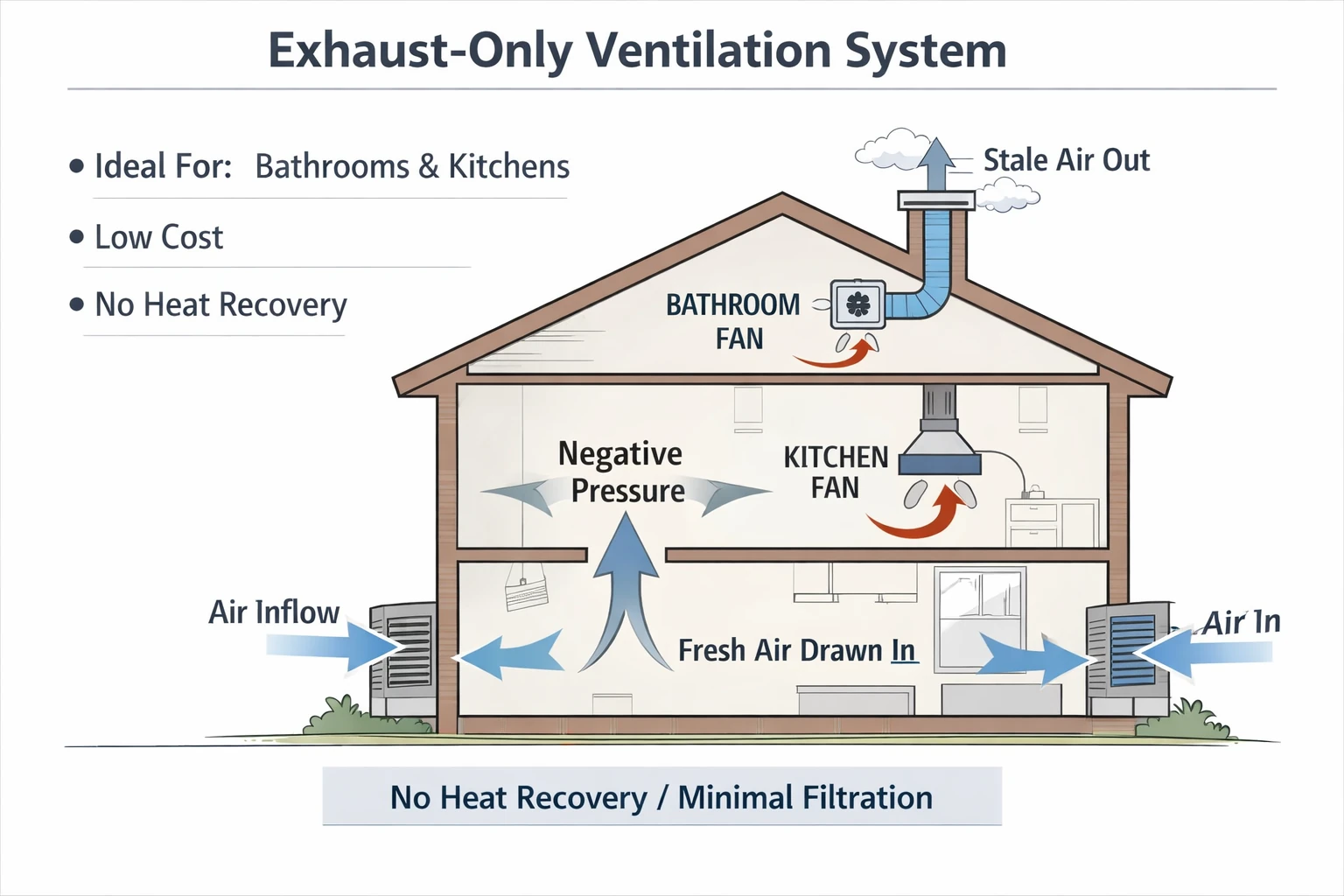
Exhaust-only systems remove indoor air using fans. Typical examples include bathroom and kitchen fans or a central exhaust fan. They create a slight negative pressure that draws outdoor air in through leaks and vents.
These systems are simple and affordable. They control moisture and odors well. However, they may draw in unfiltered outdoor air and can bring in dust or pollen if intake paths are uncontrolled.
Consider exhaust-only when you need targeted moisture control and a low-cost option. For homes in polluted areas or with allergies, plan to add filtration or choose a different type.
Use this short list to weigh benefits when shopping for an exhaust fan.
- Good for: Bathrooms, kitchens, and moisture control.
- Cost: Low initial and installation cost.
- Limitations: No heat recovery and limited filtration.
Supply-Only Ventilation: ventilation system types
Supply-only systems push fresh air into the home using a fan and controlled intake. The positive pressure helps keep outdoor pollutants out and can improve air quality. These systems often include filters at the intake. Positive Input Ventilation (PIV) units are a popular example of supply-only ventilation in the UK.
They are useful when outdoor air is cleaner than indoor air, or when you want to control where fresh air enters. Supply-only systems can increase heating or cooling load because fresh air is not preconditioned.
Supply systems are common in dry climates and homes that need filtered air entry. Think about filter quality and where the intake will be located before buying.
Quick points to consider when comparing supply-only units.
- Good for: Controlling where air enters and filtering incoming air.
- Cost: Moderate; filters add ongoing cost.
- Limitations: No exhaust control and potential energy loss.
Balanced Ventilation: ventilation system types
Balanced ventilation uses both supply and exhaust fans to move equal amounts of air in and out. This keeps indoor pressure neutral and improves whole-house air quality. Balanced systems often use ducts and a central unit.
They offer good control and can include filters and heat recovery features. Balanced systems are a solid choice for tight, energy-efficient homes that need consistent fresh air without drafts.
Balanced systems cost more to install but give steady performance and comfort. They reduce the risk of backdrafting and manage indoor pollutants better than single-fan systems.
Consider these practical features when evaluating balanced options.
- Good for: Tight, insulated homes that need steady ventilation.
- Cost: Higher installation and equipment cost, but energy savings possible with recovery units.
- Benefits: Neutral pressure, better pollutant control, compatibility with heat recovery.
Heat Recovery Ventilator (HRV): ventilation system types
An HRV transfers heat between outgoing stale air and incoming fresh air. This reduces heating or cooling energy loss while maintaining good ventilation. HRVs are common in colder climates where heat retention matters.
HRVs do not transfer moisture, so they keep indoor humidity separate from outdoor humidity. They help homes save on energy bills and keep fresh air flowing without big temperature swings.
When choosing an HRV, look at efficiency ratings, fan power, and filter options. A professional can help size the unit for your home. HRVs are a strong commercial choice for energy-conscious buyers.
Key considerations for HRV buyers include:
- Best climate: Cold or mixed climates where heat recovery gives big savings.
- Maintenance: Regular filter and core cleaning required.
- Cost: Higher than basic fans, but energy savings offset costs over time.
Energy Recovery Ventilator (ERV): ventilation system types
An ERV transfers both heat and moisture between outgoing and incoming air. This helps maintain indoor humidity while saving energy. ERVs are useful in humid or mixed climates where moisture control matters.
They reduce load on air conditioning systems and help prevent excessive indoor humidity in summer. In winter, they help retain some indoor moisture while recovering heat.
If your home has high humidity or you live in a humid climate, an ERV is a smart option. Compare ERV and HRV models to find the best match for climate and indoor comfort goals.
Use this short checklist when evaluating ERVs.
- Best for: Humid climates or homes needing moisture control plus heat recovery.
- Benefits: Saves energy and manages humidity.
- Installation: Requires ducting and professional setup for best performance.
Whole-House Mechanical Ventilation: ventilation system types
Whole-house mechanical ventilation uses a central fan and ductwork to move air through every room. It can be part of an HVAC system or a standalone unit. This approach gives uniform air change and better control than spot fans.
These systems can include filters, heat or energy recovery, and controls to run at different speeds. They are ideal for large homes or ones with few natural air gaps. They also work well with smart controls for timed ventilation.
Whole-house systems require planning for duct layout and return points. Expect higher upfront cost and professional installation, but users gain consistent indoor air quality and comfort.
Compare these factors when choosing a whole-house mechanical option.
- Good for: Large or well sealed homes needing consistent ventilation.
- Cost: High installation cost; lower operational cost with efficient units.
- Features: Filtration, programmable controls, and compatible with recovery units.
Spot Ventilation (Bath/Kitchen Fans): ventilation system types
Spot ventilation targets specific problem areas like bathrooms and kitchens. Fans remove moisture and odors at the source. They are low cost and easy to install compared with whole-house systems.
Spot fans help prevent mold and reduce cooking smells. They are not a replacement for whole-house ventilation, but they do an important job in high-moisture rooms. Use them alongside other systems for best results.
Choose fans with the right capacity measured in CFM for the room size. Quiet operation and energy-efficient motors make a big difference for everyday use.
Here are quick buying tips for spot ventilation.
- Good for: Bathrooms, kitchens, laundry rooms.
- Cost: Low purchase and installation cost.
- Tip: Match fan power to room size and look for low sone ratings for quiet use.
Ducted Mechanical Ventilation with Filtration: ventilation system types
Ducted mechanical systems bring fresh air through ducts and filters before it enters living spaces. This adds air cleaning and reduces indoor allergens. Filtration levels range from basic to HEPA-grade depending on the unit.
This type helps homes with allergy or pollution concerns by capturing dust, pollen, and some particles. It pairs well with central heating and cooling systems for centralized air treatment.
When shopping, check filter types, MERV ratings, and how often filters need replacement. Proper sealing of ducts ensures the system works efficiently and avoids leaks.
Use this list to compare ducted systems with filter options.
- Good for: Allergy sufferers and polluted urban areas.
- Benefits: Better indoor air quality through filtration.
- Maintenance: Regular filter changes and occasional duct checks needed.
Demand-Controlled Ventilation (DCV): ventilation system types
DCV adjusts ventilation rates based on occupancy or pollutant levels using sensors. It saves energy by reducing ventilation when fewer people are in the home and increasing it when needed. CO2 sensors are common triggers for DCV.
DCV is efficient and responsive. It works well in homes where occupancy varies a lot or where rooms are used at different times. DCV integrates with other systems like HRV or balanced ventilation for smarter control.
Consider DCV if you want automated control and energy savings. Sensor placement and calibration are important for accuracy. Professional setup ensures the system reacts correctly in real use.
Key buying points for DCV systems include:
- Good for: Variable occupancy homes or rooms with changing use.
- Benefits: Energy savings and targeted ventilation when needed.
- Installation: Sensors and controls add complexity and cost.
Key Takeaways
Choosing between ventilation system types starts with your climate, home tightness, and indoor air needs. Some systems focus on energy savings, others on moisture control or filtration. No single system fits every home, so match features to your priorities.
For energy efficiency, consider HRV or ERV. For simple moisture control, exhaust or spot fans will work. For allergen control, choose ducted systems with high quality filters. Balanced systems give steady performance in tight homes.
Think about installation cost, ongoing filter and maintenance needs, and whether you want automated controls like DCV. Ask vendors for sizing guidance and efficiency ratings. A properly sized system will perform better and cost less to run.
Use the information on ventilation system types to compare models, request quotes, and find installers. Make a short list of features that matter most for your house, then compare options that match those needs.